










Aquarius
Jan 20 – Feb 18

Unique and imaginative, your Aquarius baby is full of surprises. They’re a little dreamer with big ideas and a curious sparkle in their eye. Watch their creativity shine!

Number 1 Wellbeing Platform for Mothers

Shalina Healthcare supports breastfeeding.
 Zambia
|
EN





| Age Months |
Baby Boys | Baby Girls | ||
|---|---|---|---|---|
| Length | Weight | Length | Weight | |
| Birth | 46.1 – 53.7 cm | 2.5 – 4.3 kg | 45.4 – 52.9 cm | 2.4 – 4.2 kg |
| 1 Month | 50.8 – 58.6 cm | 3.4 – 5.8 kg | 49.8 – 57.6 cm | 3.2 – 5.5 kg |
| 2 Month | 54.4 – 62.4 cm | 4.3 – 7.1 kg | 53.0 – 61.1 cm | 3.9 – 6.6 kg |
| 3 Month | 57.3 – 65.5 cm | 5.0 – 8.0 kg | 55.6 – 64.0 cm | 4.5 – 7.5 kg |
WHO Child Growth Standards (healthy range). Every baby grows at their own pace — speak with your healthcare provider about your child’s growth.

| Age Months |
Baby Boys | Baby Girls | ||
|---|---|---|---|---|
| Length | Weight | Length | Weight | |
| 4 Month | 59.7 – 68.0 cm | 5.6 – 8.7 kg | 57.8 – 66.4 cm | 5.0 – 8.2 kg |
| 5 Month | 61.7 – 70.1 cm | 6.0 – 9.3 kg | 59.6 – 68.5 cm | 5.4 – 8.8 kg |
| 6 Month | 63.3 – 71.9 cm | 6.4 – 9.8 kg | 61.2 – 70.3 cm | 5.7 – 9.3 kg |
WHO Child Growth Standards (healthy range). Every baby grows at their own pace — speak with your healthcare provider about your child’s growth.
| Age Months |
Baby Boys | Baby Girls | ||
|---|---|---|---|---|
| Length | Weight | Length | Weight | |
| 7 Month | 64.8 – 73.5 cm | 6.7 – 10.3 kg | 62.7 – 71.9 cm | 6.0 – 9.8 kg |
| 8 Month | 66.2 – 75.0 cm | 6.9 – 10.7 kg | 64.0 – 73.5 cm | 6.3 – 10.2 kg |
| 9 Month | 67.5 – 76.5 cm | 7.1 – 11.0 kg | 65.3 – 75.0 cm | 6.5 – 10.5 kg |
WHO Child Growth Standards (healthy range). Every baby grows at their own pace — speak with your healthcare provider about your child’s growth.
| Age Months |
Baby Boys | Baby Girls | ||
|---|---|---|---|---|
| Length | Weight | Length | Weight | |
| 10 Month | 68.7 – 77.9 cm | 7.4 – 11.4 kg | 66.5 – 76.4 cm | 6.7 – 10.9 kg |
| 11 Month | 69.9 – 79.2 cm | 7.6 – 11.7 kg | 67.7 – 77.8 cm | 6.9 – 11.2 kg |
| 12 Month | 71.0 – 80.5 cm | 7.7 – 12.0 kg | 68.9 – 79.2 cm | 7.0 – 11.5 kg |
WHO Child Growth Standards (healthy range). Every baby grows at their own pace — speak with your healthcare provider about your child’s growth.
This tool is being prepared.
| Age | Vaccines |
|---|---|
| At Birth | BCG (Bacille Calmette–Guérin), OPV (Oral Polio Vaccine) |
| 6, 10, 14 Weeks | Pentavalent (Diphtheria, Tetanus, Pertussis, Hepatitis B, Haemophilus influenzae type b), OPV, PCV10 (Pneumococcal Conjugate Vaccine), Rotavirus Vaccine, IPV (Inactivated Polio Vaccine) |
| 6 Months | Vitamin A |
| 9 Months | MR1 (Measles–Rubella), Yellow Fever |
| 12–15 Months | Vitamin A |
| 18–24 Months | MR2 (Measles–Rubella), Vitamin A |
| 2–5 Years | Vitamin A (bi-annual) |
| 10 Years (Girls) | HPV (Human Papillomavirus Vaccine) |
Always confirm timing with your healthcare provider. Schedules can vary by country and clinic.
| Age | Vaccines |
|---|---|
| At Birth | BCG (Bacille Calmette–Guérin), OPV0 (Oral Polio Vaccine – zero dose) |
| 6 Weeks | Pentavalent 1, OPV1, PCV1, Rotavirus 1 |
| 10 Weeks | Pentavalent 2, OPV2, PCV2, Rotavirus 2 |
| 14 Weeks | Pentavalent 3, OPV3, PCV3, IPV |
| 9 Months | Measles Vaccine, Yellow Fever Vaccine |
| 18 Months | Measles Vaccine (second dose) |
Always confirm timing with your healthcare provider. Schedules can vary by country and clinic.
Jan 20 – Feb 18
Unique and imaginative, your Aquarius baby is full of surprises. They’re a little dreamer with big ideas and a curious sparkle in their eye. Watch their creativity shine!
Feb 19 – Mar 20

Gentle and dreamy, your Pisces baby has a heart as soft as their giggles. Their vivid imagination and love for cuddles will keep you swooning. A true little angel.
Mar 21 – Apr 19

Your little firecracker is full of energy and curiosity! Always ready to explore, they’ll keep you on your toes with their fearless spirit and big giggles. Adventure awaits every day with this tiny trailblazer!
Apr 20 – May 20

Cuddles and comfort are this baby’s love language. Your little snuggle bug adores soft blankets, warm hugs, and yummy treats. Patient and calm, they’ll find joy in the little things—just like you do.
May 21 – Jun 20

Chatty and curious, your mini Gemini is a bundle of bubbly energy. Always observing, they’re future chatterboxes and social butterflies in the making. Get ready for giggles and endless questions!
Jun 21 – Jul 22

Soft-hearted and deeply loving, your Cancer baby blooms with closeness. Home is their happy place, and your arms are their favorite world. Expect sweet bonding moments and tender moods.
Jul 23 – Aug 22

Born to shine! Your Leo baby lights up every room with confidence and charm. Applause, smiles, and playful drama will be their specialty—your little star is ready for the spotlight.
Aug 23 – Sep 22

Thoughtful and observant, your Virgo baby notices the details. Calm routines soothe them, and gentle structure helps their clever mind grow. A sweet perfectionist in the making.
Sep 23 – Oct 22

Balanced and charming, your Libra baby loves harmony and pretty things. Soft songs, warm company, and peaceful spaces make them bloom. A little peacemaker with a big smile.
Oct 23 – Nov 21

Intense and intuitive, your Scorpio baby feels everything deeply. Loyal cuddles, focused play, and strong bonds define them. Once they trust you, their love is forever.
Nov 22 – Dec 21

Free-spirited and joyful, your Sagittarius baby is always aiming for the next adventure. Fresh air, new sounds, and playful discovery keep them happy. Pack curiosity—they’ll bring the giggles.
Dec 22 – Jan 19

Steady and determined, your Capricorn baby takes life one careful step at a time. They thrive on routine, encouragement, and quiet pride in every milestone. A little climber with a big heart.
For fun and bonding — not a medical guide.
Nutrition, psychology and milestones for every stage — so you can focus on what matters most.

“Growing, feeding and discovering” — Breast milk remains the main source of nutrition. For the first six months, exclusive breastfeeding provides your baby with the nutrition and hydration they need.

“Talk. Smile. Respond. Repeat.” — Copy your baby’s sounds, smile back, sing songs and give your baby time to respond.

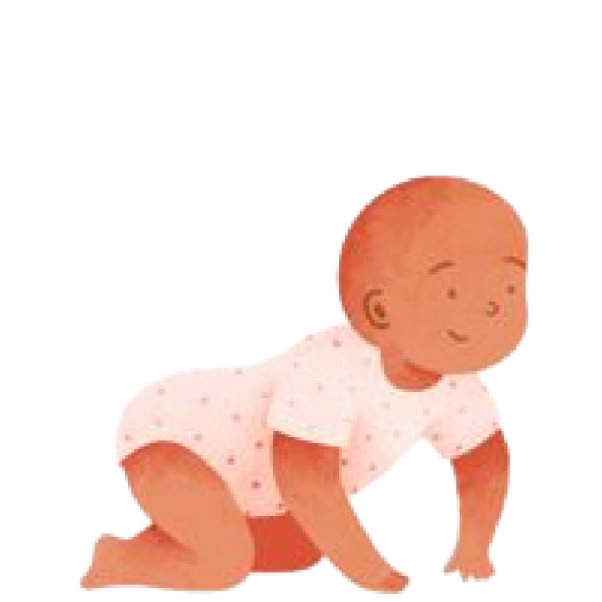
“Grow. Move. Connect.” — By 2 months, babies may look at faces, react to sounds and lift their heads during tummy time. By around 6 months, many recognize familiar people, respond with sounds and reach for toys.
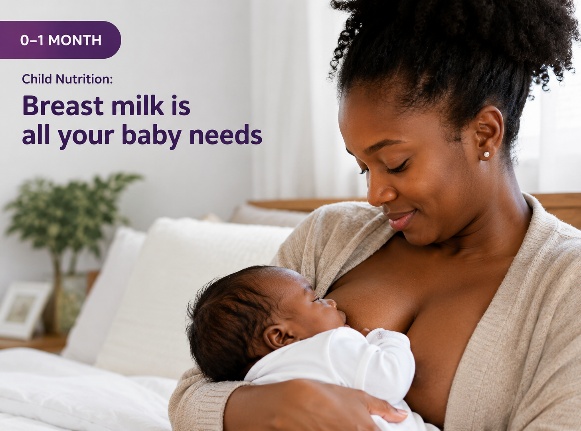
“Breast milk is all your baby needs” — For the first 6 months, breast milk provides the nutrition and hydration your baby needs.
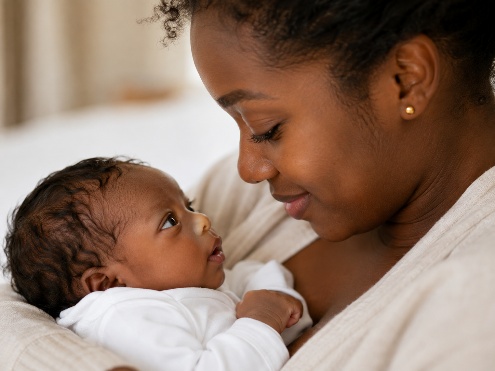
“Your baby learns through you” — Talk softly, sing during routines and respond calmly when your baby cries. Give plenty of skin-to-skin contact.

“Help your baby grow” — Make eye contact, cuddle your baby and provide safe tummy time when awake and supervised.

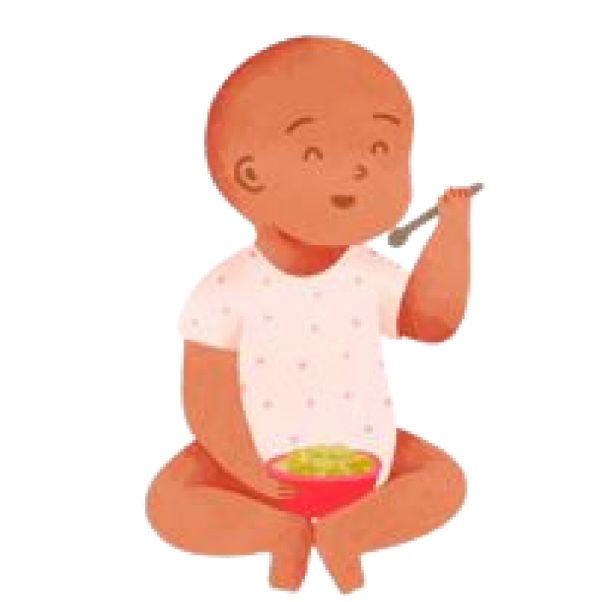
“Taste. Explore. Grow.” — Complementary foods are introduced at around 6 months because your baby’s nutrient needs begin to increase. Continue breastfeeding alongside complementary feeding.

“Curiosity is learning” — Your baby learns by reaching, grabbing, looking and listening. Safe exploration helps them discover the world around them.

“Explore. Discover. Connect.” — Create a safe floor-play space. Talk about what your baby sees, read together and respond to gestures and sounds.

“From baby foods to family foods” — Toddlers are becoming more independent eaters. Offer a variety of nutritious family foods throughout the day, including vegetables, fruits, whole grains, pulses, eggs, dairy and other nutrient-rich foods.

“Let Them Lead. You Guide.” — Toddlers want to explore, choose and do things themselves. They may also experience strong emotions because they are still learning how to communicate and regulate feelings.

“Every Day, A New Discovery.” — This stage brings rapid changes in movement, speech, independence, imagination and social interaction. Encourage your child to move, talk, play and explore. Read together every day and make everyday moments count.
Trusted support, expert guidance, and practical resources for every step of your journey!
 Read & Learn
05:00 mins

Breastfeeding is beautiful, but not always easy. It’s okay if it feels tough, Mama. Here is trusted guidance on latching, milk supply, and emotional well-being.
Read More Listen & Learn
08:00 mins
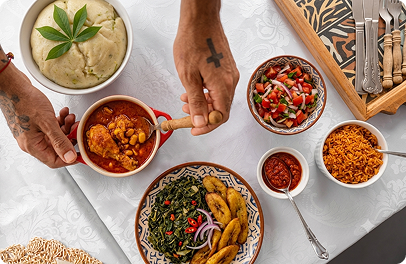
Hey new moms! Let’s chat about the rollercoaster ride before and after birth. Essential nutrients, balanced meals, and safe dietary habits.
Listen Now Watch & Learn
10:00 mins

Gentle movement, pelvic floor strengthening, and postural alignment to relieve pregnancy aches and boost physical recovery with confidence.
Watch Now




Shalina Healthcare is a market leader in making quality healthcare products affordable and available across Africa.